
SpaceX Will Make Mars Travel Routine to Secure Humanity’s Immortality
About this Capsule
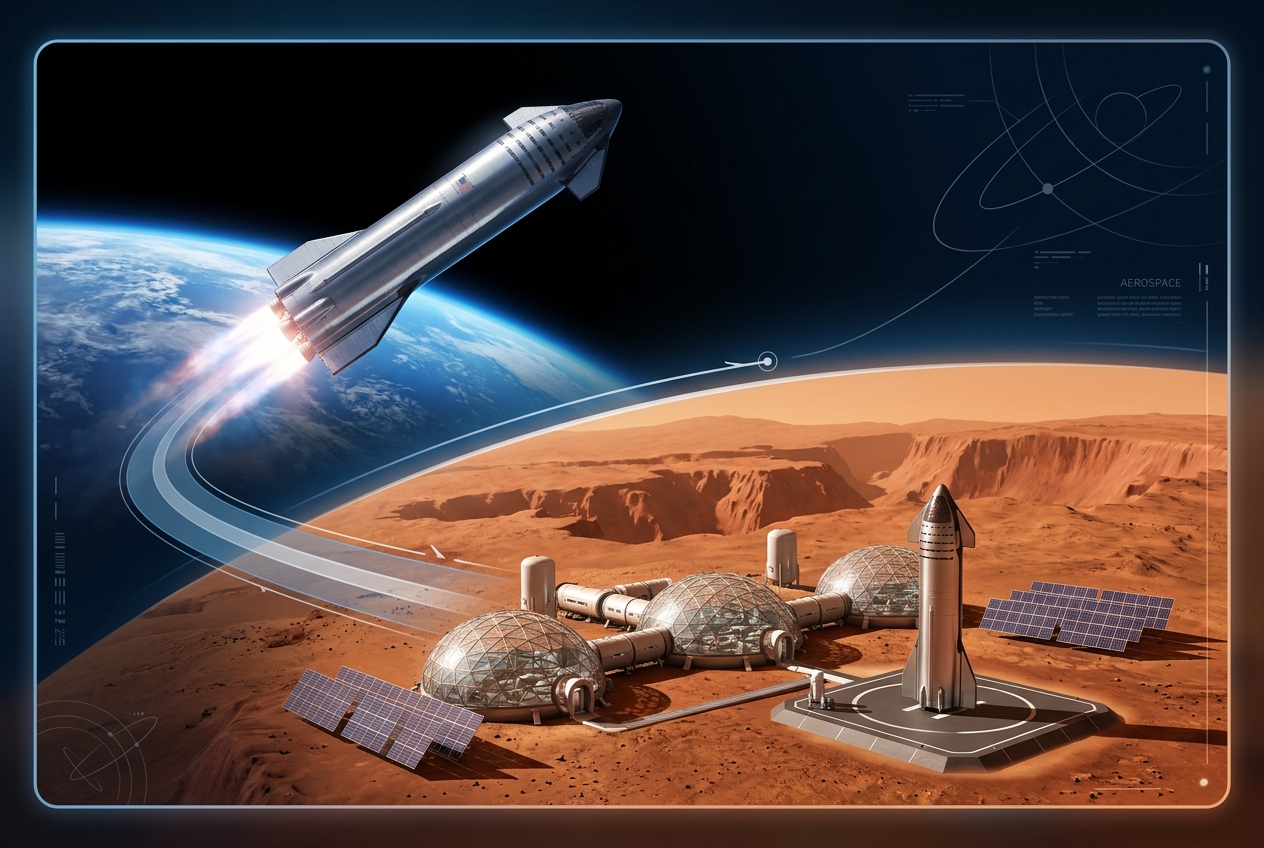
Humanity’s deepest fear of extinction drives the need to become a multiplanetary species, preserving our existence beyond Earth. SpaceX’s breakthrough in reusable rocket technology drastically lowers space travel costs, making regular missions to Mars feasible and turning interplanetary colonization from dream to routine reality. This shift means that establishing the first human colony on Mars will mark the beginning of humanity’s true immortality by safeguarding our species across planets.
Humanity aims to become a multi-planetary species by sending reusable spacecraft to Mars every two years, using methane fuel and solar power despite major engineering challenges. Progress depends on mass-producing powerful rocket engines, optimizing launch sequences, and overcoming harsh Martian conditions.
Generic AI vs This Capsule
Preview“What must happen in sequence before a Mars-bound spaceship can actually depart Earth orbit?”
Generic AI
“Before a Mars-bound spacecraft can depart Earth orbit, the key events must happen in order:
-
Wait for the right launch window
Earth and Mars must be correctly aligned so a transfer trajectory to Mars is possible with reasonable fuel. This happens about every 26 months. -
Launch from Earth into a parking orbit
The rocket first places the spacecraft into low Earth orbit, rather than sending it directly to Mars immediately. -
Check systems and line up the trajectory
Mission control verifies the spacecraft is healthy and waits until it reaches the correct point in its Earth orbit for the departure burn. -
Perform the Trans-Mars Injection burn
The spacecraft’s engine, or an attached upper stage, fires to accelerate it beyond Earth orbit and onto a solar orbit that will intersect Mars’s orbit. -
Escape Earth’s gravity well
After t...”
This Capsule
“Before the Mars-bound ship can leave Earth orbit, the critical sequence is: launch it mostly dry to parking orbit, recover the booster, launch 3–5 tanker flights, mate each tanker to the ship at the rear booster-attachment interface, transfer methane/oxygen propellant in orbit, return the tankers, then depart during the Earth–Mars window that opens about every 26 months.
Sequence:
-
Position and launch the Mars spaceship
- The full stack lifts off with about 127,800 kN / 128 million N of thrust.
- The booster uses a large Raptor cluster; in the ITS concept this is 42 Raptor engines.
-
Pass max aerodynamic pressure
- The vehicle reaches maximum aerodynamic stress at roughly 3,011 km/h.
- After this point, structural loads begin easing as the rocket climbs into thinner atmosphere.
-
Stage separation
- The booster separates from the spaceship. ...”
SpaceX Will Make Mars Travel Routine to Secure Humanity’s Immortality
Free
Sign in to buy
Mounir Semaan
View profile
Related in Science

Childhood Trauma Changes DNA and Health Across Generations
Childhood trauma does not just leave psychological scars; it leaves chemical marks on DNA that can pass to children and grandchildren, raising their risk of chronic disease. That runs against the mainstream view of trauma as a purely psychological injury confined to one generation. If the biology holds, it changes practice: screen earlier, study families across generations, and treat the body along with the mind.
'Survival of the Fittest' Never Meant the Strongest Win
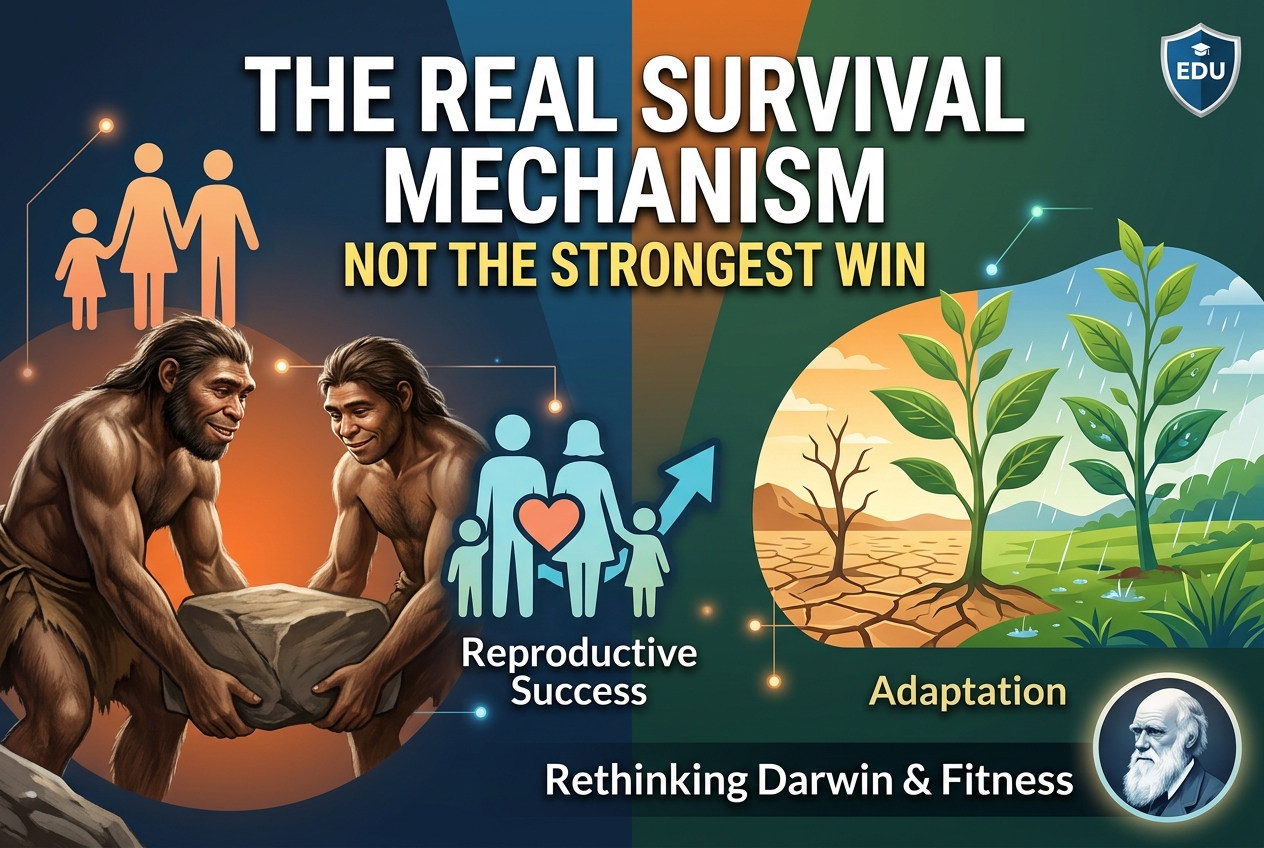
The phrase gets used to justify ruthless competition, which is nearly the opposite of what it describes. These explanations correct the record: fitness means reproductive success and adaptability, Darwin emphasized cooperation and even compassion, and the famous wording was not originally his. Rethink what actually drives survival before you borrow the phrase again.
The Climate Tipping Points Scientists Are Racing to Predict
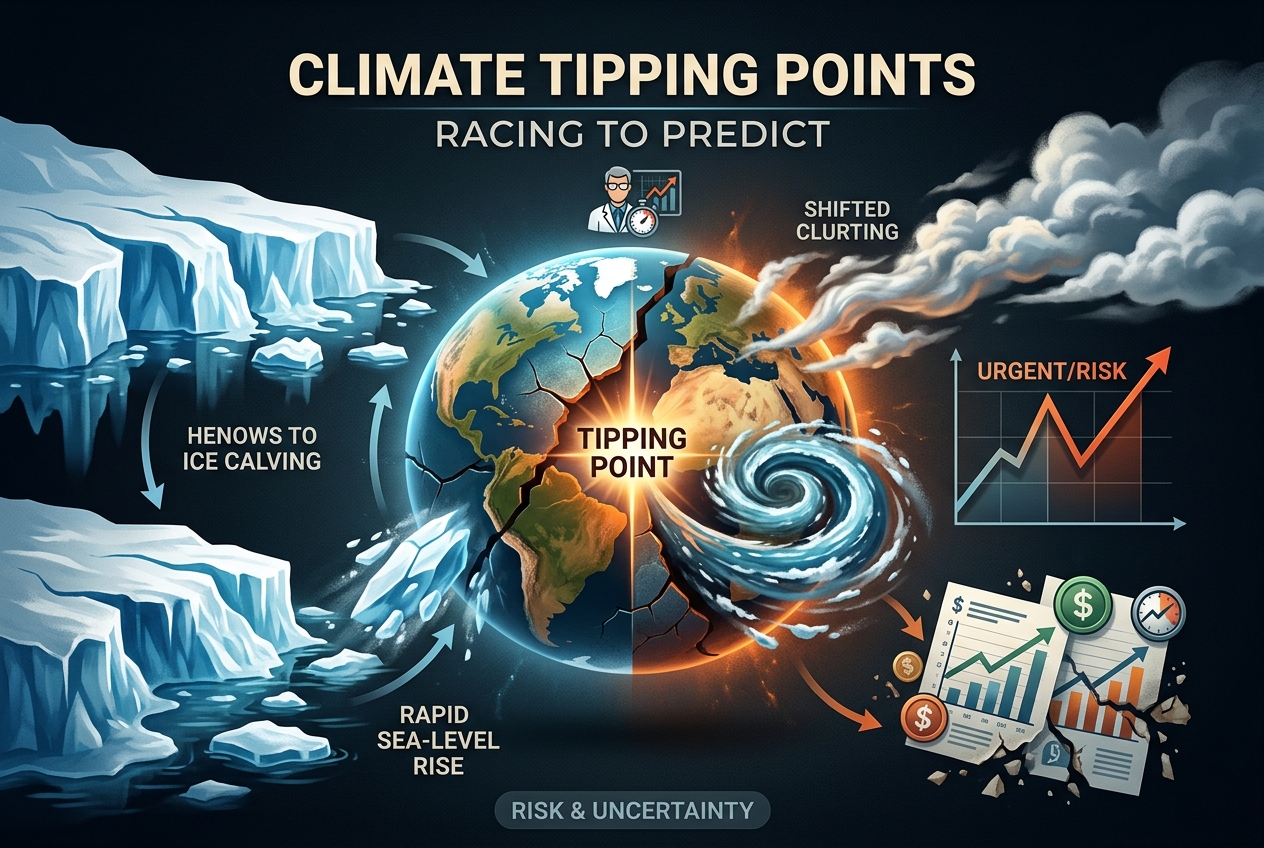
Ice sheets, ocean currents, and cloud physics could shift Earth's climate faster than the smooth curves in most projections. The findings diverge on how close those tipping points are, how much to trust the models that predict them, and how finance and policy should price risks that arrive suddenly rather than gradually. What you take from them shapes how urgent, and how hedged, you think climate decisions need to be.
Your GPS Needs Einstein's Relativity to Tell Time Right
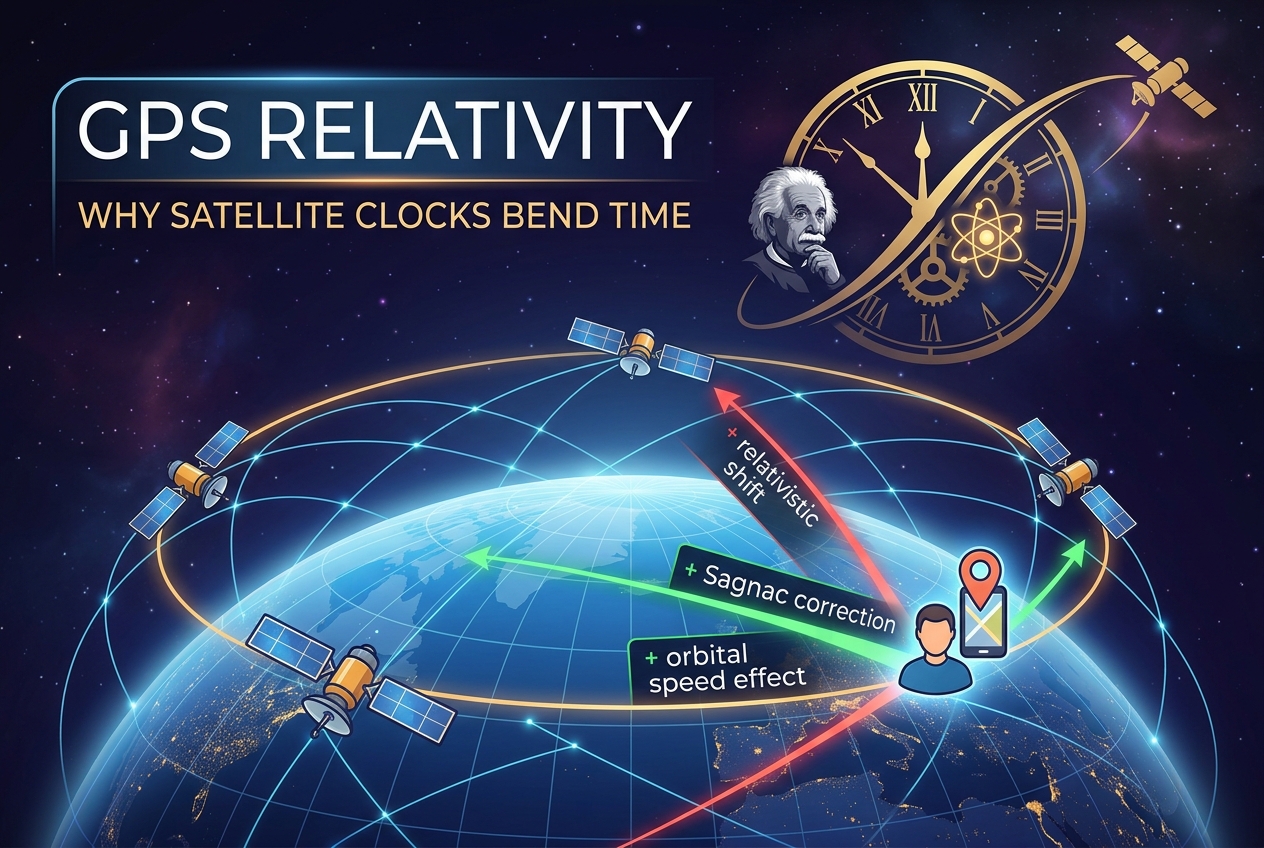
Most people think GPS just uses satellite signals to find your location, but it actually depends heavily on Einstein’s relativity to keep clocks synchronized. Unlike common belief that satellites’ clocks run perfectly, GPS receivers must apply precise relativistic corrections for satellite orbit shape and Earth’s rotation to avoid errors. By understanding and using these corrections, GPS devices achieve the accuracy we rely on every day.